> Techonology > Core Technology

Utilizing reactive oxygen and nitrogen species (RONS) generated by underwater plasma discharge, the process achieves over 99% sterilization efficiency through recirculation
Production of nitrate ions [NO₃⁻], the final absorbable form of nitrogen essential for plant growth, from water and air
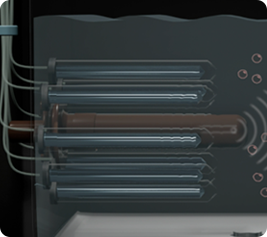
Application of ultraviolet (UV) light and ultrasound for cell wall disruption of waste biomass (e.g., spent coffee grounds), enabling extraction of nutrients for plant cultivation
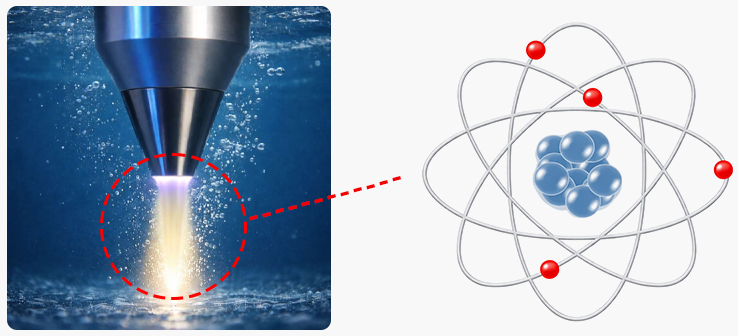
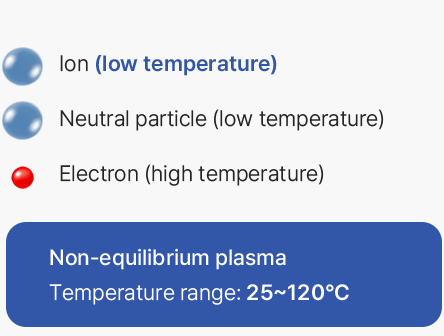
 Atomic components maintain temperature imbalance, operating below 120°C
→ Expansion of application areas (Thermal plasma: 10,000°C)
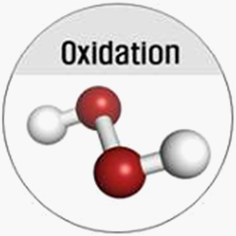
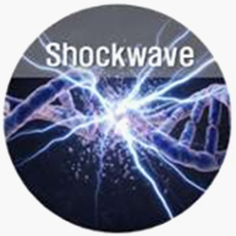
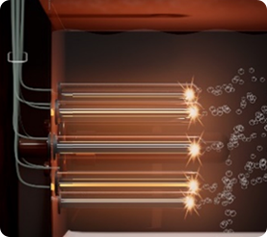
Electrode discharge-induced ionization of water and air molecules
→ Reactive species-Induced rapid oxidation & permeabilization
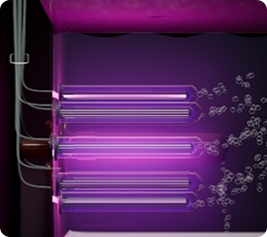
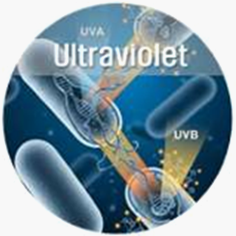
Ultraviolet Emission and Acoustic Shockwaves during Plasma Formation
→ Cell membrane disruption for sterilization and component extraction
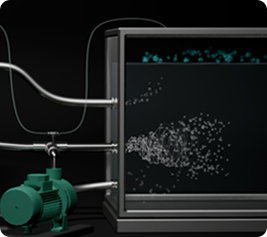
 Pressure drop from higher in-channel flow promotes plasma-activated ion influx
→ Higher underwater active ion levels → Enhanced sterilization Ultrasonic-assisted decomposition of plasma-activated bubbles under pressure drop
→ Fragmentation of grown bubbles prolongs underwater lifetime → Boosts sterilization and dissolved oxygen Enhancing underwater microbubble concentration using ultrasound and high-pressure nozzles
→ Maximized waste resource recovery via multi-bubble cavitation (cell wall rupture)
Pressure drop from higher in-channel flow promotes plasma-activated ion influx
→ Higher underwater active ion levels → Enhanced sterilization Ultrasonic-assisted decomposition of plasma-activated bubbles under pressure drop
→ Fragmentation of grown bubbles prolongs underwater lifetime → Boosts sterilization and dissolved oxygen Enhancing underwater microbubble concentration using ultrasound and high-pressure nozzles
→ Maximized waste resource recovery via multi-bubble cavitation (cell wall rupture)